
What utility and BESS specifiers should look for in a hydrogen monitor
Hydrogen monitoring for lithium-ion battery storage is different from the battery room monitoring most specifiers know. A lithium-ion cell in trouble can vent gas quickly, and a utility BESS container concentrates a great deal of energy in an enclosure that no one enters during operation. This post helps specifiers know what to look for in a hydrogen gas monitoring system for lithium-ion BESS containers.
This information is timely. As companies build more data centers to support AI, and as utilities and developers use the federal investment tax credit for energy storage (Section 48E) to strengthen grid resiliency, battery energy storage is growing rapidly. GlobalData forecasts that global battery energy storage capacity will grow sixfold between 2025 and 2030.
Lithium-ion is the leading chemistry for utility-scale BESS. Compared with lead-acid, lithium-ion offers much higher energy density and up to 10 times the cycle life. Newer chemistries, including sodium-ion, flow, zinc-air and iron-air batteries, can also produce hydrogen, and we cover them below. Data center UPS batteries are a related but separate application, with different layouts, maintenance realities and engineering teams. We cover them in a companion post on hydrogen monitoring for lithium-ion UPS batteries.
Why lithium-ion BESS needs hydrogen monitoring
Lead-acid batteries release hydrogen during charging, so lead-acid monitoring is designed to detect gas that accumulates over time. Lithium-ion batteries behave differently. They do not release significant gas during normal operation. They vent only under abnormal conditions such as thermal runaway, when mechanical stress, a manufacturing defect, electrical abuse, or outside heat causes the battery’s protective SEI (solid electrolyte interphase) layer to break down. Cells start shorting internally and heat builds. Hydrogen then appears, along with carbon monoxide, carbon dioxide and other gases. Hydrogen can burn and even explode once it reaches 4% by volume in air.
Les systèmes de gestion de batterie (BMS) surveillent la tension, le courant et la température, mais pas l'hydrogène. C'est pourquoi les normes de sécurité traitent directement des gaz inflammables.
Ce que les normes exigent
Hydrogen becomes flammable at 4% by volume, its lower flammability limit (LFL). The LFL is the lowest concentration of a gas in air that can ignite; below this level, the mixture is too lean to burn. You may also see the term lower explosive limit (LEL). Both terms describe the same threshold and are generally used interchangeably: NFPA standards use LFL, while gas detector manufacturers and safety data sheets more often use LEL. Detectors typically display readings as a percentage of LEL, so a 10% LEL reading for hydrogen corresponds to 0.4% hydrogen by volume. In the US, NFPA 855 requires action well before gas levels approach the LFL. The 2026 edition requires energy storage systems to include explosion control and prevention designed to NFPA 69, the standard for explosion prevention systems. This requirement may be waived if a deflagration hazard study shows that flammable gas cannot accumulate above 25% of the LFL on average.
Ventilation alone does not close the gap. IEEE 1635/ASHRAE Guideline 21, the guide for ventilating stationary battery installations, calculates hydrogen generation for several operating conditions: float charge, equalize charge, charger runaway (a charger failure that overcharges the battery) and thermal runaway. Each condition produces a very different amount of gas. Many sites size ventilation only for float or equalize charging. If a charger fails or a battery goes into thermal runaway, hydrogen can build faster than that ventilation removes it. Continuous hydrogen detection bridges the gap between the conditions the ventilation was designed for and the worst case, triggering alarms and added ventilation before hydrogen reaches a dangerous level.
For lithium-ion BESS, the 2026 edition of NFPA 855 also requires a hazard mitigation analysis (HMA) by default. The HMA must show that critical safety systems, including exhaust ventilation and combustible concentration reduction, remain reliable during a failure, and continuous hydrogen monitoring is how an operator shows that the ventilation is doing its job. BESS containers are also typically treated as confined spaces because they are not designed for continuous occupancy and have limited entry and exit. Under OSHA’s permit-required confined space rule, flammable gas above 10% of its LFL makes an atmosphere hazardous, and the atmosphere must be tested before anyone enters. The authority having jurisdiction (AHJ), typically the local fire code official, enforces NFPA 855 alongside NFPA 1 (Fire Code), NFPA 2 (Hydrogen Technologies Code) and the International Fire Code. Where home rule applies, local jurisdictions can also issue their own directives. Together, the confined-space classification and this local authority give the AHJ a basis to require continuous hydrogen sensing, so the operator knows the gas level inside the container at all times.
Where gas detection is used to activate a combustible concentration reduction system, such as exhaust ventilation, based on an NFPA 69 deflagration study, NFPA 855 calls for a listed continuous gas detection system that activates it at no more than 10% of the LFL, which is 0.4% for hydrogen. The ventilation must then stay on so flammable gas does not exceed 25% of the LFL on average, or 1% for hydrogen. The ventilation system and its components are treated as a critical safety system, and both systems annunciate at a supervising station.
Why activate at 10% when the limit is 25%? Lithium-ion and aqueous batteries are actually held to the same ceiling: 1% hydrogen by volume is 25% of hydrogen’s 4% LFL. The difference is how that ceiling is met. Lead-acid and other aqueous batteries release hydrogen at a steady, predictable rate during charging, so ventilation can be activated at 1% hydrogen and easily clear the gas because it builds so slowly. Lithium-ion releases little or no gas until a cell fails and then releases a large volume at once. When gas detection switches on the ventilation, hydrogen keeps building while the detector responds, the fans ramp up and air begins to move through the enclosure. Activating at 10% of the LFL leaves room for that delay, so the concentration peaks below 25%. Every second a detector takes to respond eats into that margin.
Internationally, two IEC standards apply. IEC 62485-5 covers the safe installation, operation and maintenance of stationary lithium-ion batteries up to 1,500 V DC, including protection against gas emission, fire and explosion. IEC 62933-5-2 covers the safety of grid-integrated electrochemical energy storage systems over their full life cycle, from design to end of service. Both share NFPA 855’s goal of keeping flammable gas from accumulating, but they take a risk-based approach. Neither sets a gas detection trigger point. Instead, they require a system-level risk analysis and assessment and protective measures such as ventilation, gas purging and keeping vented gas away from ignition sources, chosen based on that assessment. NFPA 855 is more prescriptive, with specific thresholds such as activating ventilation at no more than 10% of the LFL and keeping gas below 25%. That is one reason projects outside the US often reference NFPA 855 alongside the IEC standards. Under either framework, a hydrogen monitor that responds quickly and stays accurate helps show that flammable gas is under control.
Other battery chemistries that produce hydrogen
Lithium-ion is not the only chemistry headed for grid storage. Sodium-ion, flow, zinc-air and iron-air batteries are all being deployed or piloted, and each can produce hydrogen. They fall into two groups. Sodium-ion behaves like lithium-ion and vents hydrogen mainly when a cell fails. The aqueous chemistries (flow, zinc-air and iron-air) behave more like lead-acid, producing hydrogen as a side reaction during normal charging and even at rest.
Sodium-ion. Sodium-ion cells work much like lithium-ion cells and use a similar flammable organic electrolyte, but they replace lithium with abundant, lower-cost sodium. Many sodium-ion designs are more thermally stable than lithium-ion, but they can still go into thermal runaway. When they do, they vent a gas mixture similar to lithium-ion, including hydrogen, carbon monoxide, carbon dioxide and electrolyte vapor. In one study of large-format commercial sodium-ion cells, hydrogen made up as much as 42% of the vent gas at full charge. Specify hydrogen monitoring for sodium-ion the same way as for lithium-ion, with response speed at the top of the list.
Batteries à flux. Vanadium redox and zinc-bromine flow batteries store energy in liquid electrolytes that are pumped from tanks through a cell stack. The water-based electrolyte does not support thermal runaway, but a side reaction at the negative electrode generates hydrogen, especially at a high state of charge or when the system is overcharged or out of balance. Hydrogen can collect in the electrolyte tank headspace and in the enclosure, so monitoring typically covers both the tanks and the space above the stacks.
Zinc-air. Rechargeable zinc-air batteries pair a zinc electrode with oxygen drawn from the air in an alkaline, water-based electrolyte. Zinc slowly corrodes in that electrolyte and releases hydrogen, and charging can produce more hydrogen as a side reaction. The gas is released gradually rather than in a sudden burst.
Iron-air. Iron-air batteries are built for long-duration, multi-day storage. They work by reversible rusting: iron oxidizes as the battery discharges and is converted back to iron as it charges. Charging the iron electrode competes with a parasitic reaction that splits water and releases hydrogen, and some hydrogen also forms while the battery sits idle. Because these systems are deployed at large scale and charge for long periods, hydrogen management is part of the system design.
For the aqueous chemistries, the hazard is steady accumulation rather than a sudden release, much like lead-acid and nickel-based batteries. Ventilation and continuous monitoring keep hydrogen well below its LFL, so long-term accuracy at low concentrations and freedom from routine maintenance matter most. Requirements can also differ by chemistry, so confirm how the applicable edition of NFPA 855 and the authority having jurisdiction classify the technology at your site. Whatever the chemistry, the same priorities apply: response speed, accuracy that does not degrade unnoticed and no routine maintenance.
Why containers change the specification
Lithium-ion BESS installations are typically purpose-built containers delivered to the site on a standard truck trailer. Containerization helps limit the spread of a fire from one container to the next and away from buildings.
BESS containers are typically not built for human occupancy, and most of the work is done from the outside. Many designs have doors on the outside that give access to controls and sensors. Even so, whoever opens a door for maintenance must typically be a qualified electrical worker wearing arc-flash protection. Occupiable rooms and pods, as in data center UPS installations, are a different case that we cover in the companion post. Maintaining and calibrating sensors takes experienced workers at a premium labor cost, often at remote sites. That is why hydrogen monitors for containers should be designed to need no calibration or routine maintenance.
Because hydrogen is lighter than air, gas detectors are mounted high in the enclosure, typically above the battery stacks. A container may need more than one monitor, depending on its layout. Where cold and hot aisle arrangements divide the enclosure, NFPA 855 requires the gas detection system to be designed to activate on detection of flammable gas in either aisle or subcompartment.
Vitesse de réponse
Once a lithium-ion cell begins venting, conditions inside a closed container can change quickly, and every second of detection delay shortens the time available to start ventilation and respond. FM Global reports that in its off-gas detection testing, the gap between off-gassing and thermal runaway ranged from about five to 20 minutes. A monitor that responds in seconds uses that window instead of spending it. Lead-acid monitoring can tolerate a response of several minutes with no negative impact on safety. For lithium-ion, response speed belongs near the top of the specification, because fast, reliable hydrogen detection is a practical part of lithium battery fire prevention.
Speed also depends on what the monitor measures. NFPA 855 is written around gas accumulation, not just gas presence, because the explosion hazard depends on how much flammable gas has built up in the enclosure. A mixture can only ignite once it reaches its LFL, so the code ties its requirements to concentration: activate ventilation at no more than 10% of the LFL and keep gas below 25%. Off-gas sensors that detect electrolyte vapor or other volatile organic compounds (VOCs) can give early warning that a cell has started to vent, and many systems use that signal to stop charging or isolate a rack. But these sensors typically report that gas is present, often as a relative index, not how close the enclosure is to the LFL. They cannot show whether ventilation is keeping up or when the 10% threshold has been reached. Hydrogen ignites easily, burns over a wide range of concentrations and makes up a large share of lithium-ion vent gas, so a fast hydrogen reading, reported as a concentration, measures that margin directly. Off-gas detection complements hydrogen monitoring; it does not replace it.
Accuracy, calibration and testing
Whether a BESS container sits at a utility substation or a remote solar site, the question is whether the operator can reliably maintain the safety system and do so cost effectively. Any gas monitor that requires bump testing or calibration eventually forces someone to choose between skipping maintenance and accepting risk. A self-calibrating sensor avoids that choice. There is no calibration gas to carry and no calibration visit to schedule, because the sensor continuously self-calibrates.
Be careful with monitors advertised as “no calibration required.” Often that means calibration drift has been slowed, not that accuracy is being checked, so accuracy can degrade quietly until an incident. Other designs limit drift by requiring periodic sensor replacement, which is itself a maintenance event and a cost. A monitor should also check the health of its own electronics and report it, so no one assumes it is working just because a green light is on. A self-check is only as good as the evidence behind it. One proven way to confirm it is certification to UL 2075, the safety standard for gas and vapor detectors and sensors, which tests that a detector identifies and reports fault conditions. Certification gives specifiers independent confidence that the monitor’s self-checks actually work.
Selecting the right hydrogen gas monitor for BESS
Across every BESS deployment, lithium-ion battery safety and lithium-ion battery monitoring come down to four things:
- Vitesse de réponse du capteur d'hydrogène adaptée à la vitesse de défaillance des batteries lithium-ion.
- Précision du capteur d'hydrogène qui ne se dégrade pas de manière imperceptible.
- Hydrogen gas monitoring that needs no calibration or routine maintenance, so no one has to open the container to service it.
- A hydrogen sensor that lasts 10 years or more without being touched.
Ces capacités déterminent le coût total de possession et même si le système de sécurité fonctionnera au moment où cela compte le plus.
Ces exigences ont guidé le développement du système de surveillance des gaz HY-GUARD® RS de H2scan pour les batteries lithium-ion.
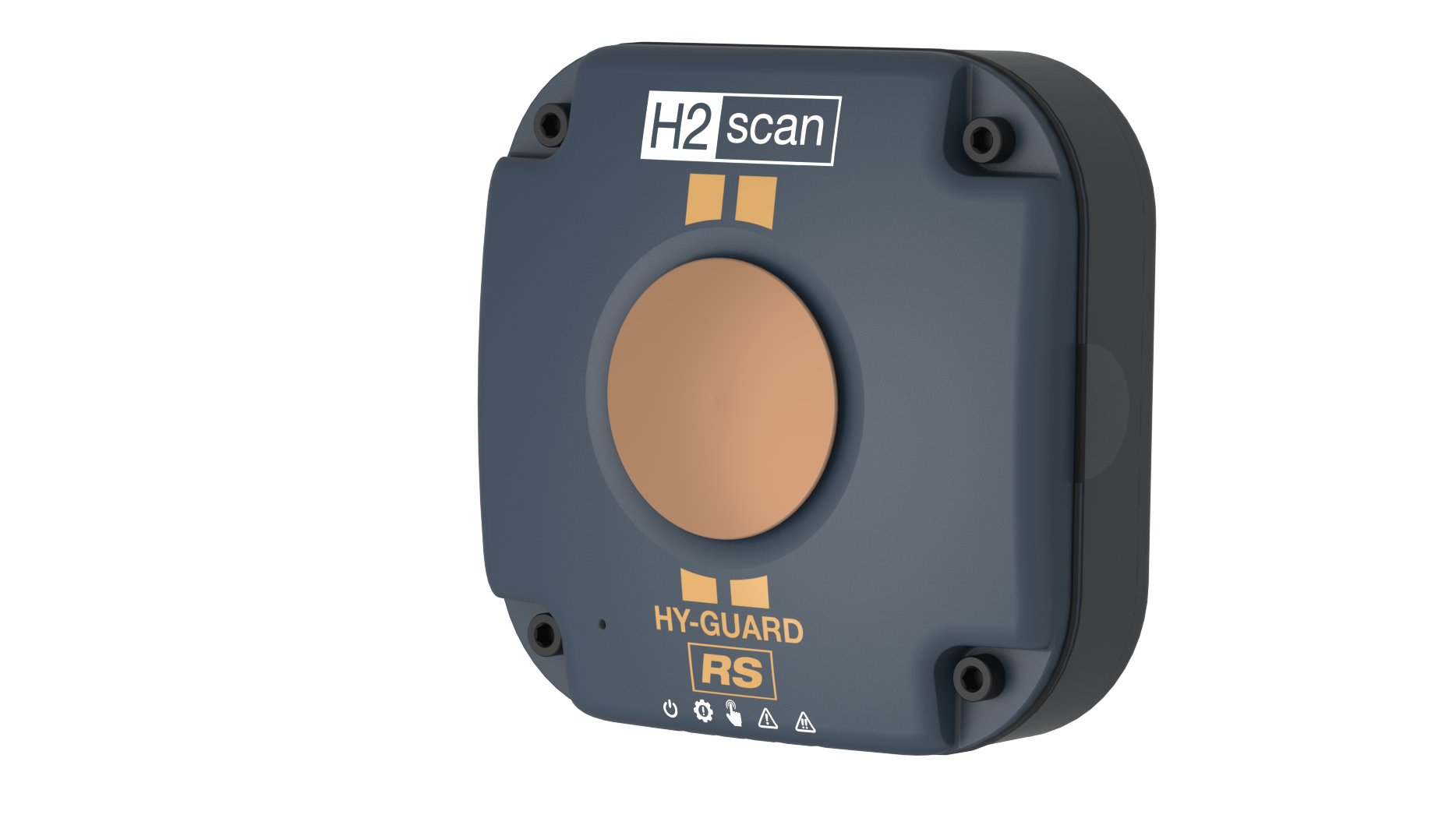
Système de surveillance du gaz hydrogène HY-GUARD RS :
- Conçu pour la vitesse des batteries lithium-ion : Le moniteur répond en moins de 10 secondes.
- S'auto-calibre en continu : No opening container doors and no calibration bottles. Patented solid-state sensor technology continuously self-calibrates.
- Technologie d'autocontrôle : The monitor checks the health of its own electronics, avoiding the risk of assuming a monitor is working just because its green light is on. HY-GUARD RS has completed UL 2075 testing, with certification pending.
- Sans entretien: Durée de vie de plus de 10 ans sans réétalonnage régulier sur site.
- Daisy chain up to four units over Modbus: Connect up to four HY-GUARD RS monitors on a single Modbus daisy chain to cover containers that need more than one monitoring point. Each unit is a complete monitor and operates independently.
- Built-in communications and safety outputs: Each monitor provides Modbus RTU, 4-20 mA and direct relay outputs to connect to the site’s monitoring system, whether that is the energy management system (EMS) in a BESS, the building management system in a data center or SCADA at a substation and to send alarms and activate fans and other functional safety controls.
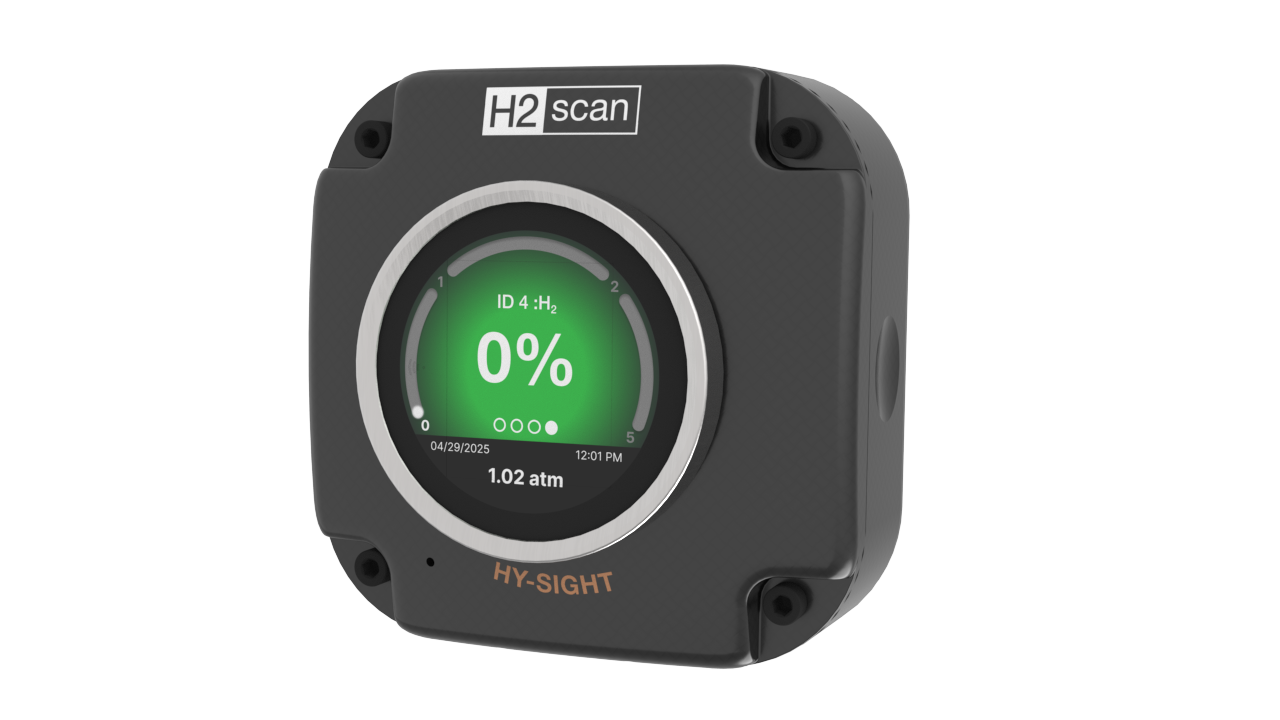
The HY-GUARD RS system runs completely autonomously; no display or controller is required. For operators who want more, the optional HY-SIGHT™ controller adds a touch screen display that gathers data from up to four HY-GUARD RS or standard HY-GUARD monitors. The display connects to the same Modbus daisy chain that links the monitors. When it is used, that Modbus chain is dedicated to the display, while each monitor’s 4-20 mA and relay outputs continue to work at the same time for the site’s monitoring system and safety controls. The HY-SIGHT controller enables at-a-glance inspection of connected monitors. It also adds features such as compiled history and data logging for analysis.
Parler à un expert about your hydrogen monitoring situation and discover how to eliminate routine sensor maintenance while improving safety.

À propos de l’auteur