Read news and announcements designed to help you better protect your infrastructure, ensure operational resilience and deliver financial returns with gold-standard H2scan® solutions.
NERC Issues Rare Alert Over Data Center Grid Instability. The North American Electric Reliability Corp. issued a Level 3 alert, its highest level, after data centers unexpectedly dropped load or rapidly changed demand in ways that created reliability concerns for the grid. The order requires transmission operators to test facilities under full-load and no-load conditions with significant voltage swings and to install dynamic fault recording devices to track how these loads behave during disturbances. Sudden swings in demand stress the transformers serving these facilities. Monitoring the hydrogen gas in transformer oil can indicate issues long before a fault emerges. By the way, the batteries that provide standby power need monitoring for hydrogen gas emissions as well. Read more.
A Transformer Failure in France Shows What’s at Stake. A June heat wave left nearly 70,000 households in Brittany, France without power for about a day after a transformer failed under high temperatures, one of several grid strains reported across Europe as record heat pushed infrastructure built for a cooler climate past its limits. U.S. heat-season outages have climbed roughly 60% over the past decade compared to the 2000s, according to Climate Central, the same trend driving H2scan’s calls for utilities to move from annual oil sampling to continuous transformer monitoring. Read more.
DOE National Lab Builds Open Battery Safety Database, Trains First Responders on BESS Response. The National Laboratory of the Rockies is taking a “cradle-to-crisis” approach to battery safety, characterizing failure risks from initial materials all the way through emergency response and publishing the results in a new open-access Battery Safety Database. The lab describes the core hazard in plain terms: heat accumulates, materials break down, and gases ignite in a chain reaction known as thermal runaway. The lab’s Flatirons campus recently hosted a live battery energy storage system emergency-response training for local fire departments, underscoring that even DOE-grade research still treats early detection and trained response as the real safeguard, not just better chemistry. Read more.
We’ve added new items to our resource section. Visit our website to access valuable insights on:
Blog: TECH TALK:

Hydrogen Detection in the Clean Energy Transition: New Applications, New Challenges
Blog: NFPA 70B Compliance:

How Condition Monitoring Technology Facilitates Transformer Assurance
Video:

HY-GUARD® Hydrogen Sensor for Battery Storage and Area Monitoring
Webinar on Demand:
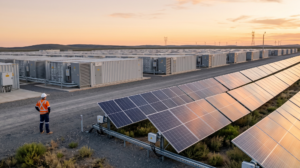
Gas Monitoring for Battery Rooms and Containers: From Spec to Startup
Visit our resource gallery for these articles and more technical content to support your hydrogen monitoring and safety programs.
We have enjoyed meeting customers and discussing our recent product developments with professionals at industry events around the globe. Our mission as always is to help our customers advance hydrogen safety, monitor the health of critical equipment such as transformers and battery energy storage.

Coming Up — September 28–October 1 SMRP Annual Conference
Raleigh, North Carolina | Booth #1131
Join us at SMRP, the premier event for maintenance and reliability professionals. Visit Booth 1131 to explore H2scan’s hydrogen sensing solutions for transformer monitoring and battery safety and discover how proactive gas detection supports long-term asset reliability.
Email us at [email protected] to make an appointment and schedule a conversation with our team.
HY-OPTIMA® 2700 Series Explosion Proof In-Line Hydrogen Analyzer
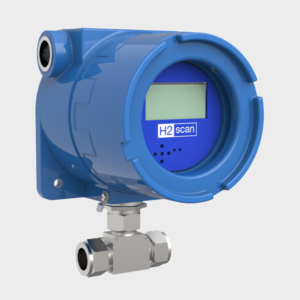
The HY-OPTIMA 2700 Series is an explosion-proof, in-line hydrogen process analyzer built for Class I, Division 1 hazardous areas, such as refining, petrochemical and hydrogen-economy production sites. Its solid-state sensor handles tough process conditions (up to 95% RH, gas temps to 60°C, 10+ year product life).
h2s-jul-digest-2700
Proprietary self-monitoring technology continuously validates sensor performance, alerting you immediately if it degrades instead of failing silently and corrupting your data record. Combined with a remote calibration interface that avoids opening the enclosure in a hazardous zone, the 2700 analyzer is well suited to plants that need continuous, reliable hydrogen data for real-time diagnostics, predictive maintenance and AI-driven analytics.
For operators responsible for vital infrastructure assets, H2scan is the hydrogen intelligence partner that transforms data into proactive situational insight, helping to identify risk early, protect and extend asset life and enable confident decisions before failure forces action and or negatively impacts society. Learn more at www.h2scan.com.
Planning to attend one of our shows? Email Us for a Meeting