
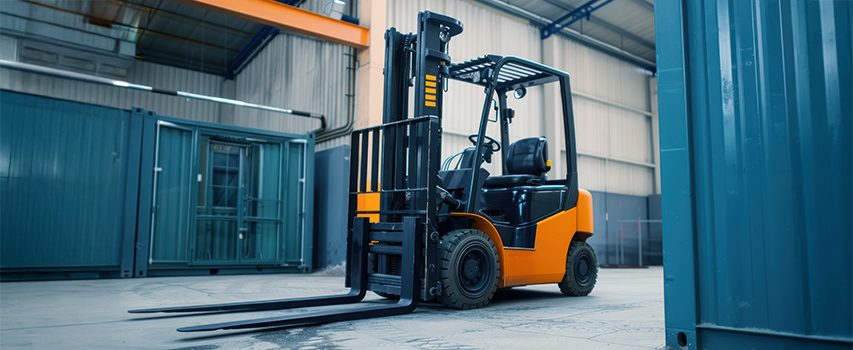
Seeing the Gas Danger Hidden in Electric Forklift Charging
Why monitoring hydrogen gas is critical for facilities with forklifts—and what to do about it
A row of electric forklifts quietly charging during the third shift may appear perfectly safe, but odorless, colorless hydrogen gas may be accumulating. The unseen risk of explosion is real, which is why facility managers are required to monitor and ventilate forklift charging areas.
According to Report Prime, the electric forklift market is growing robustly at a 13% CAGR, driven by green initiatives and the rise in e-commerce. The vast majority of the current forklift fleet is powered by lead-acid batteries, which release hydrogen gas as a normal condition of charging.
This blog post explains:
- The risks of hydrogen gas in forklift charging areas
- The causes
- The codes and standards
- How to mitigate the risks
- How to select the proper hydrogen gas sensing system
As electric forklift fleets continue to grow in warehouses, logistics hubs, distribution centers, and manufacturing plants, ensuring proper hydrogen monitoring becomes essential to prevent fires, explosions, injuries, equipment damage and downtime.
This risk mirrors many of the same challenges found in standby-power lead-acid and nickel-cadmium battery rooms. Hydrogen safety in forklift charging areas is not optional; it’s a vital part of facility protection measures for workers and equipment.
Hydrogen Build-Up in Electric Forklift Charging Areas
Lead-acid forklift batteries naturally release hydrogen gas during charging, including equalize charging. Under normal charging conditions, small amounts of hydrogen are released, which is enough to create a dangerous environment if ventilation is inadequate or compromised.
Hydrogen becomes hazardous at concentrations below the lower flammable limit (LFL) of 4%, but industry standards require keeping levels below 1% to maintain a safe operating margin. Hydrogen rises and collects at ceiling level, which is often unnoticed until levels exceed safe limits.
In forklift charging areas, a plethora of real-world issues amplify this risk. It is not uncommon for warehouses and manufacturing settings to charge electric forklifts in crowded areas with poor airflow and stacked equipment that prevents upward airflow. The challenge is compounded when a large number of chargers operate simultaneously, use rapid charging cycles or have aging batteries. What’s more, exhaust fans may not be adequate because they are obstructed, starved (negative air pressure) or malfunctioning. Because of their remote locations, fans are seldom inspected frequently, so poor performance may not be noticed until it is too late.
Codes and Standards That Apply to Electric Forklift Charging Areas
Fire inspectors and other authorities having jurisdiction are becoming more proactive in ensuring facilities comply with the codes and standards for forklift charging. The same safety principles that govern stationary battery rooms carry over to forklift charging zones:
- OSHA 29 CFR 1910.178(g) Powered Industrial Trucks
- IFC Chapter 3 requires ventilation to be provided in accordance with approved methods.
- IFC 608 (2018 and earlier), Chapter 12, section 1207, and NFPA 855 require hydrogen levels to remain below 1% of room volume.
- IMC Section 502 mandates that ventilation systems for powered industrial trucks must prevent hydrogen accumulation and ensure they pass inspection without argument.
Continuous Real-Time Hydrogen Monitoring: A Reliable Safety Layer for Forklift Safety
To comply with these codes and standards, facility managers rely on hydrogen detection sensors. The sensors should be part of a system that alarms and activates ventilation when needed.
Hydrogen levels in forklift charging zones rise slowly, often undetectably, until they cross a dangerous threshold. A proper sensor must:
- Detect accumulation of hydrogen without false alarms
- Integrate with facility alarms and building management systems so that ventilation and charger shutdown are triggered automatically
- Self-monitor for system health
- Require no maintenance, including calibration or replacement parts
- Deliver accurate, real-time readings around the clock
- Last the lifecycle of the battery
- Avoid cross-sensitivity with other gases
Why All-Purpose Gas Sensors Fall Short
Many warehouses rely on low-cost, hydrogen sensors designed for general gas monitoring. These sensors often exhibit cross-sensitivity to other gases, leading to false alarms that may necessitate unnecessary and costly evacuations. Also, low-cost sensors are vulnerable to slow response times and sensitivity drifts, creating gaps in safety coverage. Because such sensors have short operational lives, require frequent calibration, and require replacement parts, the total cost of ownership is far higher than it should be. In addition, the calibration is often neglected and as a result, the green light is on, but not truly measuring.
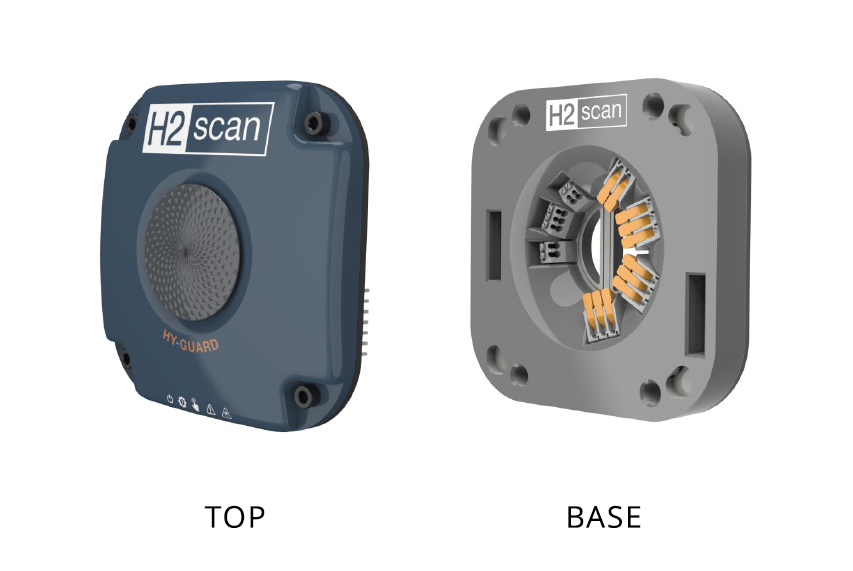
HY-GUARD™ Hydrogen Safety Solution for Electric Forklift Safety Area Monitoring
H2scan’s HY-GUARD Advanced Hydrogen Monitoring for Battery Safety System brings next-generation hydrogen detection to environments where forklift batteries are charged, swapped, or maintained. The hydrogen-specific, no-maintenance benefits make it the most practical and reliable solution for busy forklift operations.
- Hydrogen-specific, not cross-sensitive to other gases
- Maintenance-free, self-calibrating capability
- Easy BMS and charger shutdown integration
- Real-time monitoring and fast response
- Simple installation
Electric forklifts and efficient charging are essential to warehouse and factory operations, but they also introduce real hydrogen risks that must be proactively managed. Hydrogen detection isn’t just a compliance checkbox; it’s about protecting people, preserving assets, and preventing avoidable downtime.
H2scan’s HY-GUARD delivers the most accurate, maintenance-free, hydrogen detection available, making it the ideal solution for warehouses, logistics centers, and most standby forklift battery applications. Contact us to discuss your particular application with our expert.
About the Author: Kris Costello