
The artificial intelligence boom is driving unprecedented expansion in enterprise battery infrastructure. Nearly 75% of new data centers are being designed with AI workloads in mind, while hyperscalers leased 7.4 gigawatts of capacity in Q3 2025 alone — more than all of 2024. This infrastructure surge is creating thousands of new battery rooms across critical facilities, from basement UPS (uninterruptible power supply) systems in Manhattan broadcast facilities to upper-floor installations in pharmaceutical campuses.
But this rapid proliferation has outpaced safety system sizing and/or proper implementation. Most enterprise battery rooms still rely on hydrogen detection approaches designed for simpler, smaller installations — and these systems are failing systematically. The same infrastructure surge is playing out in utility-scale battery energy storage systems (BESS) and large-format UPS installations across every sector of critical infrastructure. Industry analysis reveals three critical failures that transform hydrogen monitoring from protective safeguards into sources of dangerous false security.

Failure #1: Hydrogen Sensors Are on but out of Calibration
Years of personal visits to battery rooms in all types of facilities uncovers hydrogen detection equipment that has operated without proper calibration for extended periods — sometimes years — while continuing to display normal operational indicators. Traditional catalytic bead and electrochemical sensors require periodic calibration, typically every six months, to maintain accuracy specifications. When this maintenance is deferred or neglected, sensors drift outside their specified ranges while continuing to report readings and display green status lights.
The root cause often lies in the fragmented nature of commercial building management. In typical enterprise facilities, tenants hire specifying engineers to design battery backup systems, contractors install the equipment, and property management firms assume responsibility for maintenance, despite having zero involvement in the original installation of the equipment. This string of handoffs leaves the staff responsible for the equipment missing critical knowledge about its critical role in facility safety, as well as its standard maintenance and operating procedures.
Maintenance staff unfamiliar with sensor requirements may treat hydrogen detectors like any other building fixture — if the indicator light is green, no action is needed. The problem compounds over time as sensors continue displaying normal status while their actual sensitivity has degraded significantly. Facilities believe they have hydrogen protection when what exists in the facility is monitoring equipment showing inaccurate readings; in other words, the green light is on, but the equipment isn’t functioning.
This failure mode highlights the critical importance of sensor technologies that eliminate calibration dependencies through self-monitoring capabilities and long-term stability.

Failure #2: False Alarms Lead to Disabled Hydrogen Monitoring Systems
A second common failure occurs when hydrogen detection systems produce excessive false alarms. Since hydrogen is highly flammable, these alarms often trigger a fire department response automatically, which in turn disrupts production, impacting facility revenue. Operators frequently disable the monitoring system to stop the false alarms. However, the whole series of events is typically triggered due to improper sensor selection, or improper placement in the battery room.
- Sensor selection: Thermal conductivity detectors (TCD) and metal oxide sensors, while highly sensitive, can generate constant alarms when positioned too close to normally gassing lead-acid batteries.
- Sensor placement: In rooms with low ceilings and limited airflow, sensors mounted directly above battery banks detect localized hydrogen concentrations that trigger alerts even under normal charging conditions.
This placement can be compared to installing a carbon monoxide detector directly next to an automobile exhaust pipe. The device is definitely detecting carbon monoxide, but there is no way to determine whether dangerous concentrations are accumulating at breathing levels.
The consequences of disabling the hydrogen sensor due to nuisance alarms is a lack of protection. Potential accumulation zones remain unmonitored, and facilities operate with undetected safety risks.
In fact, a disabled sensor may be more dangerous than no sensor at all, as it creates false confidence in monitoring systems that are no longer functional.
Proper hydrogen monitoring requires sensor technologies and placement strategies that differentiate between normal battery gassing and dangerous accumulation levels. Sensors should be positioned in natural airflow paths, near ventilation points, or in identified dead air spaces where hydrogen might collect, not directly over emission sources.
Failure #3: Hydrogen Alarm Events Without Documented Response Protocols
sensors but lack formal protocols for responding to alarm events. When hydrogen detection systems trigger alerts, many facilities have no documented procedures defining who responds, what actions should be taken, or how incidents should be recorded.
This represents a fundamental gap between detection and protection. A hydrogen alarm without a response plan is equivalent to a fire alarm system with no evacuation procedures.
Regulatory frameworks clearly mandate formal alarm response protocols.
- NFPA 76 and NFPA 855 both require that hydrogen detection alarm events be addressed through documented procedures.
- The International Fire Code (IFC) contains equally specific requirements for monitoring system responses.
- Municipalities might have local regulations. In New York City, Local Law fire code B28 requires facilities to maintain detailed alarm logs documenting who received each alarm, what response actions were taken, and what outcomes resulted.
Beyond regulatory compliance, response protocols must account for the distributed responsibility common in commercial facilities. Many building owners might be unaware that they bear ultimate liability under most fire codes. It doesn’t matter whether tenants, engineers, contractors, or management firms were involved in system design and installation. This makes it critical that building owners ensure their maintenance staff receive appropriate training and understand its responsibilities under emergency protocols.
Effective hydrogen monitoring programs integrate detection technology with operational procedures that ensure alarms generate appropriate responses rather than confusion or inaction.
Implementing Effective Battery Room Hydrogen Monitoring
Reliable battery room protection requires integrating the right detection technology, proper installation practices, and comprehensive operational protocols—moving beyond checkbox compliance toward systems designed for real operational environments.
Fortunately, technology can help. Modern solid-state hydrogen monitoring systems like our HY-GUARD® Hydrogen Area Monitor address all three failure modes — self-calibrating technology eliminates calibration gaps, hydrogen-specific detection reduces false alarms, and continuous self-monitoring verifies accurate operational status in a way that traditional sensors cannot deliver.
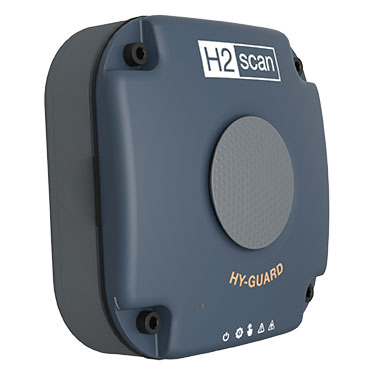
Contact H2scan to learn about self-monitoring hydrogen sensor technology for comprehensive battery room safety programs. Visit h2scan.com or contact their technical team to discuss your specific requirements.

About the Author