Behavior of Solid-State Hydrogen Sensors Across Different Carrier Gases
Picture this: inside a nuclear processing facility, hydrogen silently accumulates from radiolysis, corrosion reactions and isotope-handling operations. Undetected, it creeps toward the flammability threshold. Without continuous, reliable hydrogen monitoring, facilities face fire hazards, over-pressurization risks and containment challenges that could result in catastrophic failures.
Hydrogen detection is a critical safety and process-control function in nuclear processing environments, where hydrogen can be generated by radiolysis, corrosion reactions and isotope-handling operations. In systems involving water-cooled reactors, fuel reprocessing, waste treatment or hot-cell reactors, hydrogen generation rates can vary with radiation intensity, chemistry and material interactions. Without continuous and reliable monitoring, hydrogen accumulation can lead to flammability hazards, over pressurization and challenges to containment.
The Challenges of Critical Hydrogen Detection in Nuclear Facilities
Accurate hydrogen monitoring in nuclear facilities poses unique challenges due to low-oxygen or oxygen-free atmospheres, inert carrier gases, elevated temperatures and radiation exposure. Many conventional sensing technologies are susceptible to poor sensitivity, electrolyte depletion or signal drift under these conditions.
Deuterium analysis, measuring the concentration or exchange of deuterium—a stable, heavy isotope of hydrogen—to study molecular structures, biological processes and environmental systems, is commonly incorporated into nuclear hydrogen monitoring programs because it enables validation of process performance using a nonradioactive hydrogen isotope.
Beyond safety monitoring, hydrogen and deuterium measurement supports operational insight throughout the nuclear fuel cycle. Continuous hydrogen and deuterium data can indicate material degradation, abnormal chemical reactions or process excursions in systems such as isotope separation units, tritium-handling facilities and spent-fuel storage. By providing real-time feedback on hydrogen behavior, H2scan sensors contribute to improved process control, predictive maintenance and regulatory compliance.
That’s where H2scan’s advanced solid-state hydrogen sensors make the difference. Engineered specifically for safety-critical applications, these sensors operate reliably across air, nitrogen, helium and even vacuum environments — delivering the consistent performance nuclear facilities require.
Deuterium interacts with H2scan’s sensing elements through the same dissociative adsorption and diffusion mechanisms as hydrogen, allowing meaningful evaluation of response behavior, calibration stability and isotope-dependent kinetics. This approach supports system qualification and readiness for tritium-containing environments while minimizing radiological risk during development and testing.
Hydrogen Sensor Technology Forms the Core of Early Detection
For nuclear facility monitoring, H2scan sensors leverage a fundamentally different approach: dissociative adsorption of hydrogen at the sensor surface, followed by atomic hydrogen diffusion into the sensing element. This atomic-level interaction provides exceptional selectivity to hydrogen and deuterium while completely avoiding combustion-based or consumable sensing mechanisms that degrade over time.
The advantages are clear:
No electrolyte depletion or chemical consumption
Stable, repeatable measurements over extended deployment periods
Superior performance in oxygen-free and inert gas environments
Excellent selectivity to hydrogen with minimal interference from other gases
Reliable operation across diverse carrier gases, including nitrogen, helium, air and vacuum
Beyond safety monitoring, these sensors enable real-time process insights throughout the nuclear fuel cycle. Continuous hydrogen and deuterium data reveal material degradation, abnormal chemical reactions and process excursions in isotope separation units, tritium handling facilities and spent fuel storage systems.
Deuterium interacts with H2scan’s sensing elements through the same dissociative adsorption and diffusion mechanisms as hydrogen, allowing meaningful evaluation of response behavior, calibration stability and isotope-dependent kinetics.
Proven Performance in CAI Evaluations: What the Data Show
Calibration testing of the H2scan HY-OPTIMA Model 5332 and 700 series hydrogen sensors was conducted using a custom-built PSI gas sensor testing station designed to provide precise control of gas composition and pressure. System pressure was monitored using a Keller Lex 1 pressure sensor with a measurement range of 0–2 bar(a) and an accuracy of ±0.05% full scale. Gas mixture accuracy was maintained within ±1 mbar to ensure repeatable and controlled test conditions.
High purity gases were used throughout the evaluation to minimize background contamination and isolate sensor response behavior. Deuterium gas purity was specified at 99.8%, while nitrogen and helium carrier gases were supplied at 99.996% purity. These gases were selected to represent inert and low-oxygen environments commonly encountered in nuclear processing applications.
Measurements were performed at room temperature, maintained between 19 and 22 °C, with a fixed 10-minute interval between measurement points to allow for sensor stabilization and surface equilibration. The HY-OPTIMA Model 5332 and 700 series sensors were evaluated across their full operating range of 0–5% deuterium by volume.
Analog sensor output was measured using a Fluke 179 digital multimeter with a current resolution of 0.01 mA and a specified accuracy of ±(1.0% + 3 digits). This instrumentation enabled precise assessment of sensor response, repeatability, and calibration behavior under controlled gas exposure conditions.
Outstanding Stability and Repeatability
Sensors in both models maintain consistent measurements across multiple test cycles, with minimal drift or baseline variation. This stability is critical for long-term deployments in nuclear facilities where sensor replacement is costly and logistically challenging. Table 1 illustrates sensor performance in various environments.
Carrier Gas
Stability
Repeatability
Response Trend
Notes
Air
High
High
O2 Limited
Oxygen displacement
Helium
Very High
High
Fast
Minimal surface interference
Nitrogen
High
High
Moderate-Fast
Reduced O2 effects
Vacuum
Moderate
Moderate
Surface Limited
Chemisorption Driven
Table 1. HY-OPTIMA Models 5332 and 720 stability, repeatability and response in different environments
Carrier Gas Effects
Test data demonstrated that oxygen interaction with the sensing surface is the dominant factor governing hydrogen response behavior. In air-based environments, molecular oxygen occupies active surface sites, requiring displacement before hydrogen dissociation and absorption can occur. This competitive adsorption mechanism results in longer response times and increased latency, especially at lower hydrogen concentrations where surface coverage effects are more pronounced.
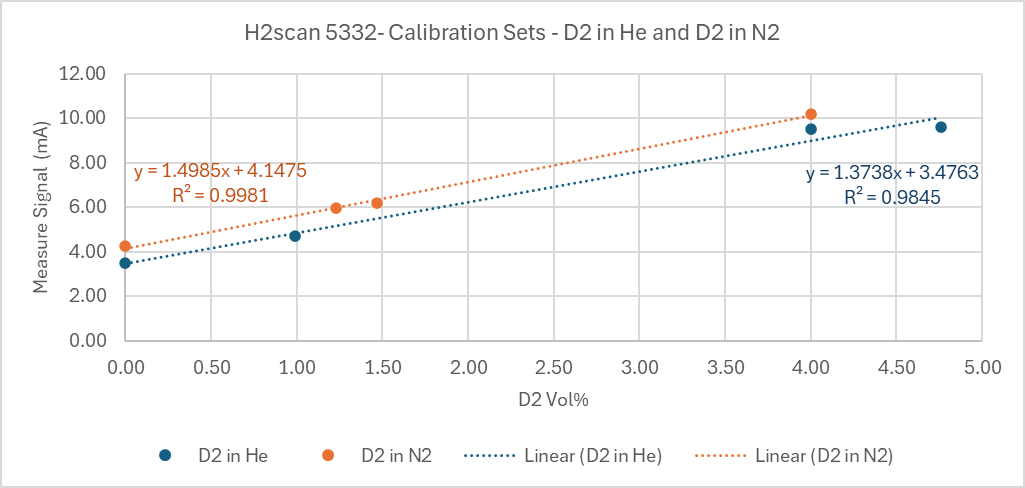
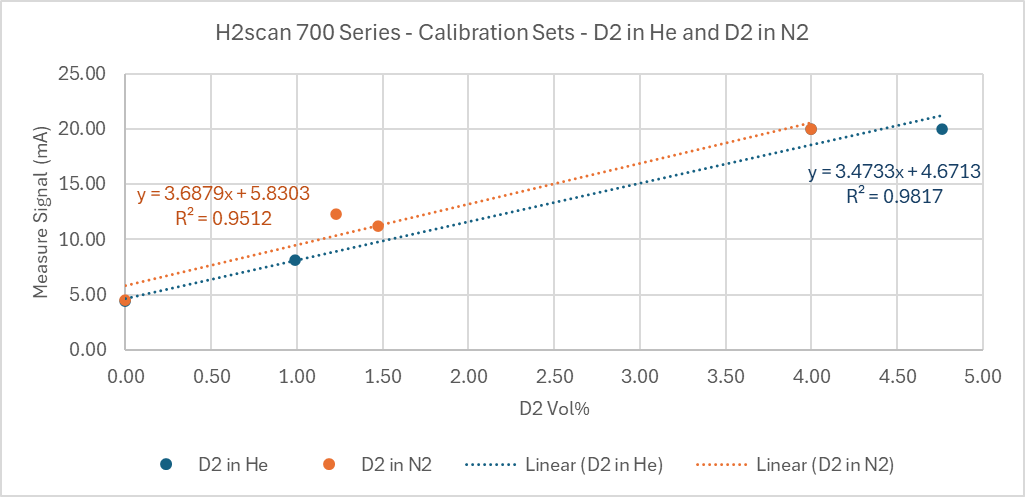
Figure 1. HY-OPTIMA Model 5332 calibration sets as a function of deuterium volume in helium and nitrogen.Figure 2. HY-OPTIMA 700 series calibration sets as a function of deuterium volume in helium and nitrogen.
In contrast, measurements performed in nitrogen and helium carrier gases showed faster response kinetics due to the lower oxygen content. These inert environments minimize surface site competition, allowing hydrogen to dissociate and diffuse into the sensing element more readily. Helium provided the most rapid response behavior, attributable to its chemical inertness and low molecular mass, which reduces boundary layer effects and facilitates efficient gas exchange at the sensor surface.
Under vacuum conditions, sensor response became increasingly surface limited, highlighting the role of chemisorption dynamics rather than bulk diffusion. While hydrogen dissociation and absorption remain active, reduced gas density and altered heat transfer mechanisms contributed to baseline variability and longer stabilization times. These results underscore the importance of carrier gas composition when interpreting hydrogen sensor performance, particularly in low-oxygen or vacuum environments common to nuclear processing and advanced manufacturing systems.
Hydrogen Sensor Self-Calibration Behaviors
Calibration results for both the HY-OPTIMA models 5332 and the 700 series demonstrate a strong linear response to deuterium concentration across helium and nitrogen carrier gases, confirming the robustness of H2scan’s sensing approach under inert conditions.
As shown in the calibration sets, both sensor models exhibit high coefficients of determination (R² ≈ 0.95–0.99), indicating consistent proportionality between measured signal and D₂ volume percent. The linear fits further highlight predictable sensor behavior across the full 0–5% measurement range, supporting reliable calibration transfer between carrier gases when appropriate zeroing and stabilization procedures are applied.
Differences observed between helium and nitrogen carrier gases reflect the influence of background gas properties on sensor sensitivity and response slope. In both sensor models, nitrogen environments produced slightly higher signal output at equivalent deuterium concentrations, consistent with reduced diffusivity and altered surface exchange dynamics compared to helium. Helium-based measurements, while exhibiting marginally lower slopes, maintained excellent linearity, underscoring the sensor’s ability to operate effectively in low-density, highly inert environments commonly encountered in nuclear applications.
Both HY-OPTIMA Model 5332 and 700 series rely on nitrogen or air zeroing and certified hydrogen span gases to establish a stable baseline prior to calibration. Temperature and flow stabilization were identified as critical factors for achieving repeatable results, particularly when transitioning between carrier gases with differing thermal and mass-transport properties. Legacy and current calibration protocols emphasize drift control and awareness of the oxygen background to maintain long-term accuracy. This ensures consistent performance across extended deployment periods and varying operational environments.
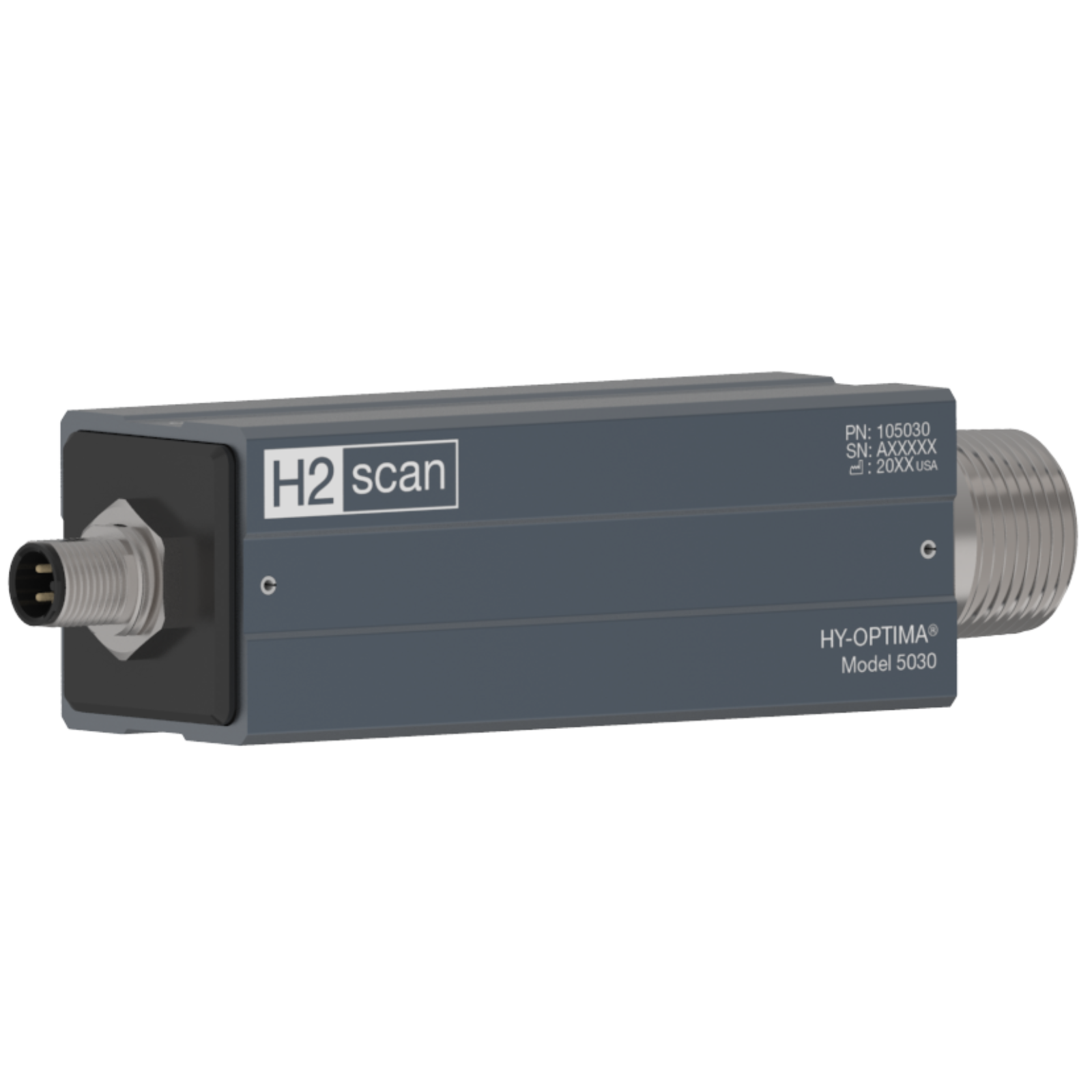
The HY-OPTIMA 5332 is intrinsically save and not cross-sensitive to other gases
Understanding the Science Behind the Performance
The superior performance stems from H2scan’s fundamental sensing technology. In air-based environments, molecular oxygen competes for active surface sites, requiring displacement before hydrogen can dissociate and absorb. This competitive adsorption results in longer response times. However, in nitrogen and helium carrier gases, common in nuclear processing, oxygen competition is eliminated, enabling faster response kinetics and more efficient hydrogen detection. Helium provides the fastest response due to its chemical inertness and low molecular mass, which reduce boundary-layer effects and facilitate efficient gas exchange at the sensor surface.
The Bottom Line: Superior Monitoring for Critical Nuclear Safety Applications
H2scan’s HY-OPTIMA sensors represent a breakthrough in hydrogen and deuterium monitoring for nuclear processing applications. Their solid-state design, exceptional stability, linear response characteristics and proven performance across diverse carrier gases make them uniquely suited for the demanding requirements of nuclear facilities.
Whether monitoring safety compliance, optimizing process control or supporting predictive maintenance programs, these sensors deliver the accuracy and reliability that nuclear operations demand. By providing continuous, reliable hydrogen detection in challenging environments where traditional sensors fail, H2scan technology helps facilities maintain the highest safety standards while supporting operational excellence.
As hydrogen continues to play an increasingly important role across the nuclear fuel cycle — from reactor operations to isotope separation and waste management — the need for robust, reliable monitoring has never been more important. H2scan’s proven technology provides the foundation for safer, more efficient nuclear processing operations.
Learn More
To discover how H2scan’s hydrogen sensing technology can enhance safety and performance in your nuclear facility, visit the H2scan Process Analyzer page.
Intrinsically safe in-line analyzer for chemical, refining and green-hydrogen processes — the only hydrogen analyzer offering at least 10 years of self-calibrated operation.